
The First Move That Usually Makes Things Worse
When a garage door won't open on a cold morning, the instinct is to hit the remote again and again, or pull the manual release and shove the door up by hand. It's tempting because it feels like the door just needs a little extra push to break free, and most mornings you're already late and don't have time to investigate. But a motor that's already straining against something frozen or seized can strip its gears in seconds, and a hand-forced door can snap a cable or pop a roller out of the track. If the door is fighting you, stop and figure out what it's fighting before you add more force.
What You'll Actually Notice
A garage door affected by a cold snap rarely just refuses to move entirely. More often it shows one of these patterns:
- The door opens a few inches, stalls, and the opener reverses or clicks off
- It moves, but visibly slower than normal, with the motor sounding like it's working harder
- The bottom few inches won't lift at all, as if something is holding the seal to the slab
- The door travels unevenly, rising faster on one side than the other
- Manually lifting it (with the opener disconnected) feels noticeably heavier than usual
Each of these points to a different stage of the system, and checking them in order saves you from replacing parts that were never the problem.
1. Start at the Bottom Seal
In a climate as humid as ours, a quick freeze after a wet evening is often enough to bond the rubber weatherstrip to the concrete slab underneath it. This is the most common reason a door seems stuck only at the very bottom. The fix: never force the opener through this. Pour a little warm (not boiling) water along the seal line to loosen the bond, then check the strip itself. If it's cracked, flattened, or stiff from age, Tallahassee's swings between humid heat and the occasional cold snap will keep causing this, and the seal should be replaced rather than fought with every time.
2. Check the Track for Obstructions and Movement
Metal track brackets contract slightly in cold temperatures, and any dirt, pollen residue, or built-up moisture inside the track can stiffen into a thin layer that catches the rollers. Run a hand along the inside of the track (with the door closed and power off) feeling for grit or a sticky film. A clean, dry track with brackets snug against the wall rules this out quickly.
3. Inspect the Springs for Rust and Stiff Lubricant
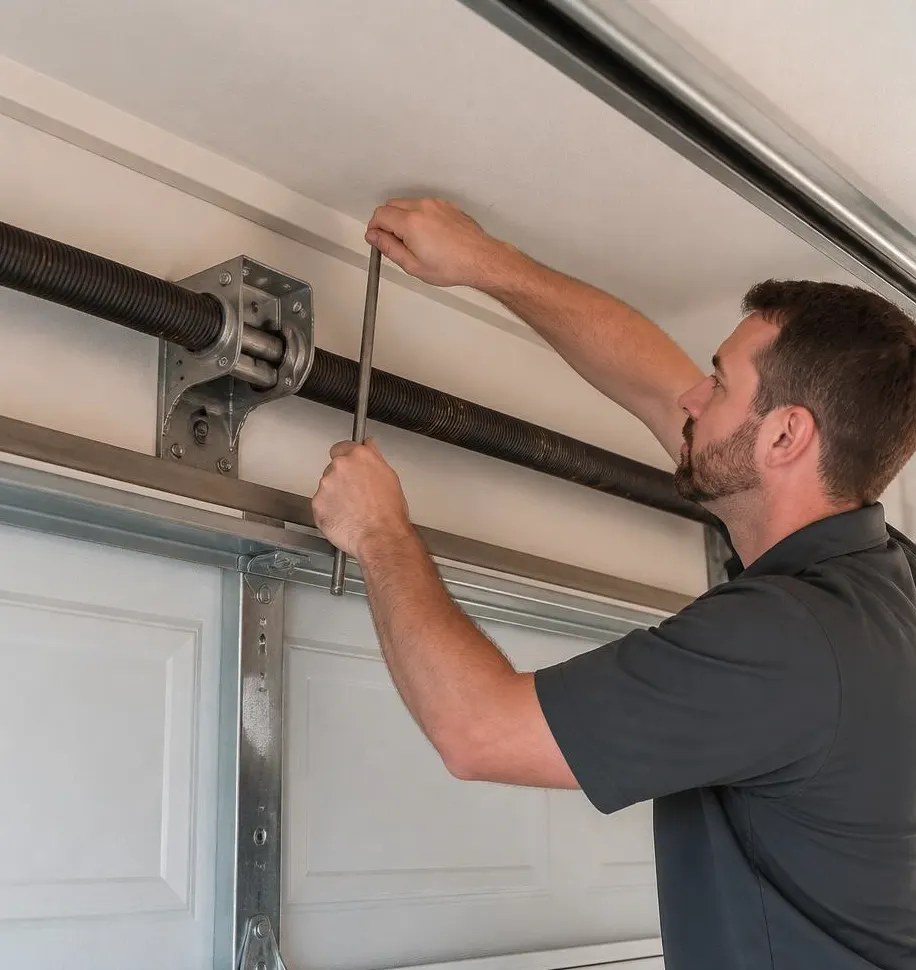
Torsion and extension springs rely on a thin coat of lubricant to flex smoothly. Cold thickens that lubricant, and any surface rust that's crept in from months of humidity gives the coils something to catch on as they wind and unwind. A door that's heavy to lift by hand, with visible orange specks on the spring coils, usually points here. Fixing it means cleaning off surface rust and reapplying a proper garage door lubricant, not household oil, which attracts dust and gums up again fast.
4. Look at the Rollers and Hinges
Nylon rollers and metal hinge pins are next in line. Dried-out or dirty lubricant at these pivot points stiffens in colder air, and a door that moves unevenly from side to side often has one or two hinges binding while the others move freely. These get cleaned and relubricated the same way as the springs, working each roller and hinge by hand to make sure it's actually moving.
5. Test the Opener's Sensors and Limit Settings
If the door stalls partway and the opener reverses or shuts off, the photo-eye sensors near the floor or the opener's travel limits may have shifted slightly, which can happen as metal brackets contract in cooler temperatures. A quick check that both sensor lights are solid and aligned, and that the opener's limit settings match where the door should actually stop, usually resolves this without touching a single mechanical part.
When to Call Tallahassee Overhead Door Co
If you've checked the seal and track and the door still won't move smoothly, or if lifting it by hand reveals real resistance in the springs, that's where we come in. Our garage door spring repair handles the rust and tension issues a cold morning tends to expose, and if the trouble turns out to be the opener itself, misaligned limits or a motor that's been straining for weeks, our garage door opener installation team can replace it with something built for Leon County's mix of heat, humidity, and the occasional hard freeze.
If your garage door is sticking, stalling, or straining this season, call Tallahassee Overhead Door Co for a straightforward inspection and repair, serving homeowners throughout Tallahassee, FL and the surrounding area.